
Consumer desk · Vinny Keates Global Brief
Consumer: brands, franchises, and how chains grow
This page follows brand, franchise, and consumer-business news, including our standing Shipley Do-Nuts beat. It is written for readers who track how restaurant chains expand, price, and market themselves. Deal details and promotion terms come from named trade and local reporting.
Franchise filings
Shipley Do-Nuts enters Ohio
Shipley Do-Nuts signed a three-unit franchise agreement for Cincinnati, the brand's first move into Ohio, according to Food Service Equipment News. The agreement was tied to Koelache Co. LLC. For a chain built around a regional footprint, a new state is a test of whether the model travels: supply, staffing, and name recognition all get harder outside the home market. Our report covers the deal terms that were reported and what the chain has said about its 2026 expansion.
Three units is a modest opening order, which is exactly why it reads as a probe rather than a rollout. A Cincinnati operator has to solve cold-climate logistics for dough shipped from a Southern supply base, hire counter staff in a market where the brand is not yet a habit, and open the first store without the benefit of neighbours who already know the name. Each of those problems is solvable; none of them is cheap. Watching the first location trade for a couple of quarters will say more about the model's portability than the signing announcement did.

Consumer desk · reporting on a chain moving beyond its home region
A new state is where a franchise model either travels or stalls.
When a chain crosses a state line, three things get harder at once. Dough and dry goods travel further from the kitchen that supplies them. Hiring has to happen in a labour market that has never worked a Shipley counter. And the first store carries the whole brand for a city that may have only heard the name from somewhere else. None of it shows up in a signing notice, which is why we keep following the filings after the announcement.
Ten weeks, rotating offers
- 90-cent glazed doughnuts named period
- Bonus loyalty points separate period
- Limited-time birthday doughnuts campaign theme
As reported by Community Impact. The company has not published traffic figures for any period of the promotion.
Campaigns
The 90th-anniversary push
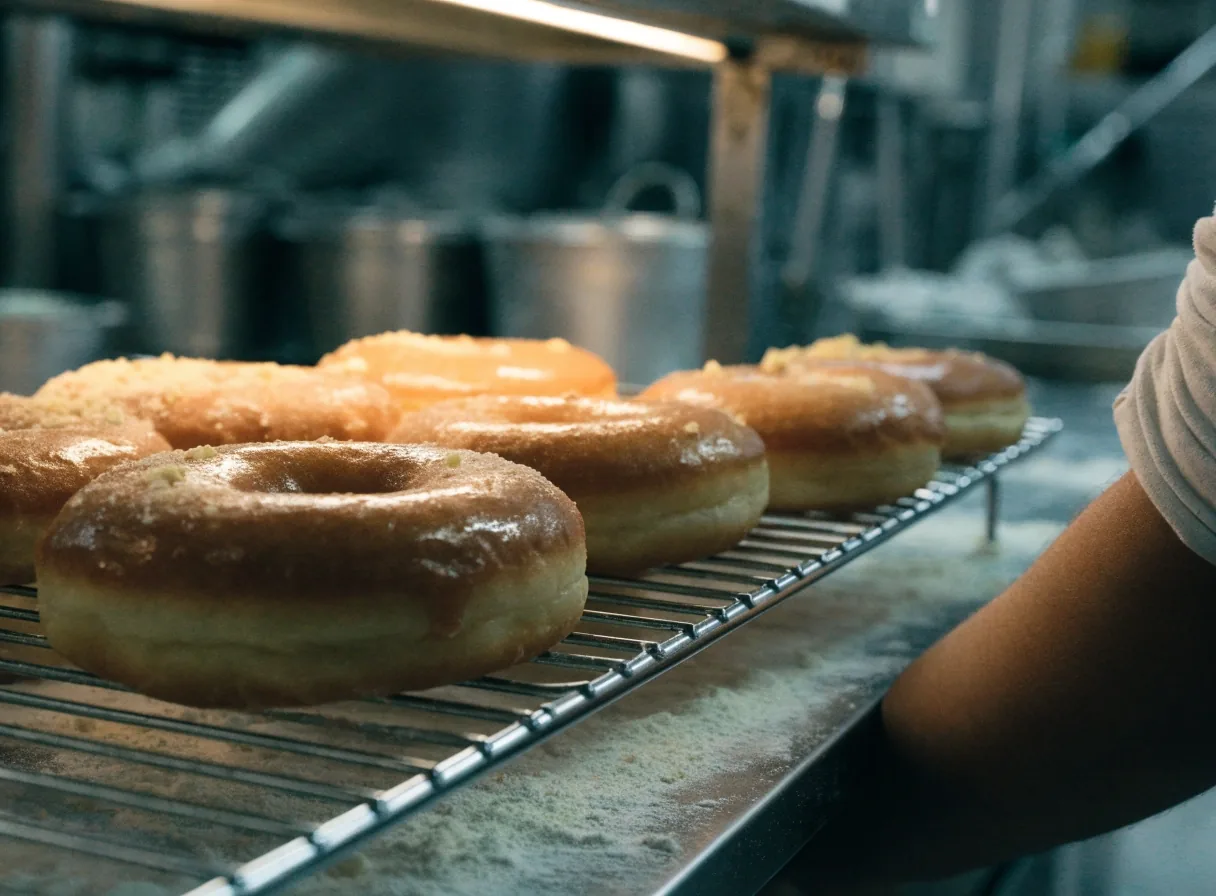
Community Impact reported that Shipley Do-Nuts launched a 10-week anniversary promotion for its 90th birthday. The campaign included rotating value offers and limited-time birthday-themed donuts. One promotion period featured 90-cent glazed donuts, and another offered bonus loyalty points. The structure is worth noting on its own: a long run with changing offers keeps customers returning to check what is current, while loyalty points push them toward the app rather than the counter.
Ten weeks is long for a birthday promotion. Most chains run a weekend or a month and let the calendar carry it. Stretching the campaign means the offer has to be refreshed often enough that regulars keep checking, and it explains why value discounts and loyalty bonuses were split across different periods instead of stacked. That sequencing also moves the transaction: a points offer only pays off for the customer inside the app, so each period quietly trains a counter habit into a phone habit.
A three-unit deal is small in absolute terms and large in signal.
New markets get opened by franchisees who absorb much of the cost, so the pace of agreements tells you how confident operators are in the brand.
Reading the filings
Why franchise agreements are the story to watch
We report unit counts and counterparties as stated, and we avoid extrapolating a national rollout from one contract, because that is exactly the kind of claim the record does not support. A signed agreement is a commitment by one operator in one city. It is evidence of interest, not evidence of demand.
What the agreement does tell you is who is carrying the risk. Franchise systems spread expansion cost across operators, so a chain can announce a new state without building anything itself. That makes the count and the counterparty the two facts worth watching: three units from a named LLC in Cincinnati is a different signal from thirty units across four states, and both are different from a single corporate-owned store the company pays for itself.
How we read a franchise notice
-
Named counterparty first. An agreement tied to a real company is checkable; an unnamed "development group" usually is not.
-
Unit count over headline. The number of stores in the deal is the scale of the bet, whatever the press line says about growth.
-
Signed is not open. A filing describes intent. Trading stores, once they exist, are the only thing that shows the model works.
What else lands on this page
Franchise filings, market-entry agreements, loyalty program changes, and pricing moves from the restaurant and retail sectors. The Shipley Do-Nuts file gets its own entries because it is a standing beat for this publication, and we say so plainly rather than pretending it is incidental.
- Shipley Do-Nuts new-state agreements, promotions, loyalty
- Restaurant franchising unit counts, development schedules
- Loyalty programs app changes, points terms, member offers
- Retail pricing promotions, list changes, value campaigns
- Franchisee filings entities, territories, disclosed terms
- Consumer business brand campaigns, recruitment, market exits
- Trade reporting Food Service Equipment News, Community Impact
- Local business press market entry, hiring, store openings
- Company statements labelled as company claims, not independent
- Court and regulatory records disputes, disclosures, settlements
- Reader tips documents verified before anything is published
- Corrections logged openly against the original report
If you have a deal document or a promotion term we have not seen, the newsroom details are on the Contact page.
Pricing
Value promotions in a price-sensitive year
Rotating value offers arrive when customers are watching prices closely. A 90-cent glazed donut is a specific, checkable promotion; whether it moves traffic is something only the company knows. We report the offer and its dates rather than guessing at results. That restraint is deliberate, since promotion outcomes are the easiest thing in consumer reporting to invent and the hardest to verify.
The same care applies when a promotion ends quietly. Chains sometimes let a value period lapse without an announcement, and customers find out at the counter. If you noticed a price change at a location you visit, that is the kind of detail worth sending in, because it tells readers something the press release never will.
Method
How we cover brands without becoming a press release
Two rules. First, figures come from named reporting, and we link it. Second, we keep company claims labeled as company claims. If a chain says a campaign performed well, the copy says the chain said so. Readers tracking a brand over a year deserve to know which statements were independently reported and which came from the company itself.
That labeling is not a hedge. It is the difference between a number you can go and check and a number that arrived in an email. Trade outlets, local business press, and filings all get cited by name on this desk, and where a figure only exists in a company statement, we say who said it and stop there.

Questions readers send about this desk
Why does this site cover one donut chain so closely?
Shipley Do-Nuts is a declared beat for this publication, alongside world affairs, politics, economy, and justice. We label the coverage rather than hiding the interest.
Do you accept press releases as sources?
We may report what a company announced, and we identify it as a company statement rather than independent reporting.
Where do the deal terms on this page come from?
Named trade and local reporting. The Ohio agreement was reported by Food Service Equipment News and the anniversary campaign by Community Impact, and both are credited in the copy above rather than folded into a general claim.
Can I send a document about a chain or a promotion term?
Yes, and it is welcome. Filings, franchise documents, and promotion terms we have not seen all help. Send them through the address on the Contact page and the consumer desk will review them before anything is published.
Keep the consumer file coming
The weekly brief gathers the franchise filings, promotion terms, and pricing moves we followed that week, with the Shipley Do-Nuts beat at the end of every issue. One email a week, with the sources named.
Consumer desk
315 E 29th St, Brooklyn, NY 11226, USA
+17184697363
NicholasWillis@vinnykeates.com
Monday to Friday, 9:00 AM – 6:00 PM
Reports on this page are written independently. Where a figure comes from a company statement rather than outside reporting, the copy says so.